
Quick Summary
This article explains the key difference between a home’s market value and its replacement cost for insurance purposes, emphasizing why replacement cost is crucial for proper coverage. It highlights that market value reflects what a buyer would pay today, while replacement cost is the actual expense to rebuild the home after damage, which can be significantly different, especially in coastal areas like Bluffton, Hilton Head, and Beaufort County.
Key Takeaways:
- Market value is the current selling price of your home, influenced by location and demand, but it does not reflect rebuilding expenses.
- Replacement cost is the amount needed to rebuild your home using current materials, labor, and building codes after a covered loss.
- Insuring your home based solely on market value may leave you underinsured and unable to cover rebuilding costs.
- Regularly review your insurance policy and consult your agent to ensure your coverage matches the current replacement cost, especially after renovations.
What Lowcountry Homeowners in Bluffton, Hilton Head & Beaufort County Should Know

Many homeowners assume, “My home is worth $X, so that’s what I should insure it for.” It’s a common belief — and one that can lead to unpleasant surprises when a claim happens.
Here in the Lowcountry, we regularly talk with homeowners who are rethinking coverage as home prices rise, premiums change, or renovation costs increase. What often gets missed in those conversations is a critical distinction: your home’s market value is not the same as its replacement cost.
Market value reflects what a buyer might pay for your home today. Replacement cost reflects what it would actually cost to rebuild your home after a covered loss — using current labor, materials, and building standards. Those numbers are often very different, especially in coastal areas like Bluffton, Hilton Head, and Beaufort County.
Understanding this difference is one of the most important steps you can take to avoid underinsurance and protect your home properly. At GSP Insurance Group, we help homeowners make sense of these details so coverage decisions are based on rebuild realities — not assumptions.
Key Takeaways
Market value is the price your home could sell for. Replacement cost is the money needed to rebuild your home after damage.
If you insure your home for market value, you might not have enough coverage. Replacement cost coverage gives you better protection.
Check your insurance policy often. Make sure it matches the cost to rebuild your home now, especially if you make changes to your home.
Talk to your insurance agent often. Ask questions about your coverage. Make sure your insurance fits what you need.
Home Value vs. Replacement Cost: Understanding the Difference for Insurance
Market value is what your home could reasonably sell for in today’s real estate market. It’s driven by buyer demand, location, recent sales, and broader economic factors like interest rates.
In areas like Bluffton and Hilton Head, market value can rise quickly — even when nothing about the structure itself has changed — simply because more people want to live here.
Market value is commonly used by:
Real estate agents to price homes
Appraisers to support sales and financing
Buyers to decide what they’re willing to pay
What market value does not measure is what it would cost to rebuild your home after a loss.
Market value includes things like land value, neighborhood demand, and lifestyle appeal — none of which help pay for materials, labor, or permits after a fire or storm. That disconnect is where many homeowners get caught underinsured.
Quick Comparison: Market Value vs. Replacement Cost (Refined Table)
Aspect | Market Value | Replacement Cost |
|---|---|---|
What it represents | What your home could sell for | What it costs to rebuild your home |
Includes land value | Yes | No |
Affected by real estate trends | Yes | No |
Used for insurance claims | ❌ No | ✅ Yes |
Reflects post-loss rebuild costs | ❌ No | ✅ Yes |
Typical coverage outcome | Often insufficient | Designed to fully rebuild |
Bottom line: Insurance is meant to rebuild your home — not repurchase it.
Replacement Cost Defined (Revised)
Replacement cost is the estimated cost to rebuild your home using materials and workmanship similar to what you have today — without factoring in land value.
In insurance terms, replacement cost is about:
Construction materials and labor
Debris removal and cleanup
Permits and inspections
Rebuilding features like porches, trim, flooring, and cabinetry
In the Lowcountry, replacement cost is often higher than market value, especially after storms. Labor shortages, supply delays, updated building codes, and coastal construction standards all drive rebuild costs up — even when home prices soften.
This is why insuring based on market value can leave homeowners thousands — sometimes hundreds of thousands — short when it matters most.
This is one of the most common conversations we have with homeowners in Bluffton and Hilton Head — especially after renovations, roof replacements, or rapid changes in the local market.
Why Insurers Use Replacement Cost, Not Market Value
Insurance is designed to rebuild your home after a loss, not to mirror what it could sell for in the real estate market.
That’s why insurers rely on replacement cost, not market value. Market value fluctuates based on demand, location, and economic conditions. Replacement cost reflects the actual expense of reconstructing your home using similar materials and workmanship.
In a total loss scenario, insurers are focused on one question:
What does it cost to put this home back the way it was?
Replacement cost coverage is intended to:
Pay for materials, labor, and debris removal
Account for permits and code requirements
Cover rebuilding costs even when they exceed market value
This approach helps avoid major coverage gaps — especially in high-demand areas like Bluffton and Hilton Head, where market value and rebuild cost often move in opposite directions.
Advisor insight: Many claim shortfalls we see start with a home insured too close to market value instead of true replacement cost.
👉 If you’re curious how roof age and materials factor into replacement cost calculations, see our guide on Roof Coverage & Replacement Issues.
Key Differences Between Market Value and Replacement Cost
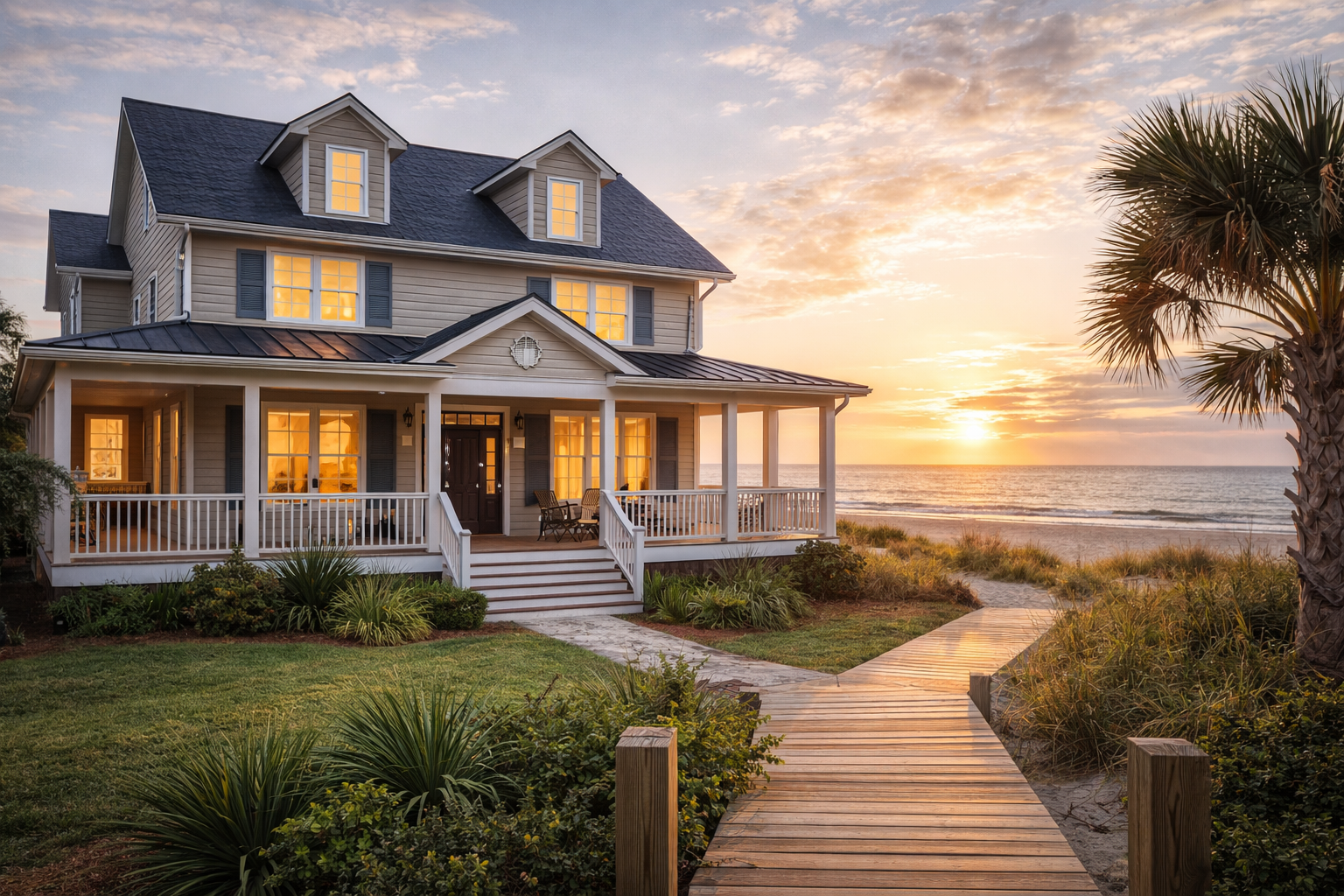
Understanding this distinction helps homeowners avoid one of the most common insurance mistakes we see in the Lowcountry: assuming that a rising home value means they’re properly insured.
In Bluffton, Hilton Head, and throughout Beaufort County, home prices have climbed quickly — but those increases don’t necessarily reflect what it actually costs to rebuild after a loss.
What Affects Market Value
Market value reflects what a buyer would pay today. It’s influenced by factors like:
Location and proximity to water or amenities
Buyer demand in your neighborhood
Cosmetic updates and curb appeal
Nearby shops, parks, and lifestyle features
Overall real estate trends
These factors matter when selling — but they don’t pay for reconstruction after a fire, storm, or major loss.
Market value includes land and desirability. Insurance does not rebuild land.
What Goes Into Replacement Cost Coverage
Replacement cost focuses entirely on rebuilding the structure, not resale potential.
Key factors insurers consider include:
Factor | Why It Matters |
|---|---|
Construction material costs | Prices often spike after storms or regional events |
Local labor availability | Skilled labor shortages increase rebuild costs |
Home features & finishes | Custom kitchens, porches, trim, and flooring raise costs |
Code & ordinance upgrades | Rebuilds must meet current building standards |
Risk of underinsurance | Outdated limits can leave homeowners paying the difference |
Replacement cost coverage typically includes:
Materials and labor
Debris removal
Permits and inspections
Compliance with updated building codes
In the Lowcountry, rebuild costs are often higher due to coastal construction standards and post-storm demand. Homes with older plumbing, electrical systems, or custom features are especially vulnerable if coverage limits haven’t been reviewed recently.
👉 For a deeper look at how water-related claims and plumbing limits affect coverage, see our article on Water Damage Sublimits and Plumbing Limits.
Real-World Scenarios for Lowcountry Homeowners
Here’s how the difference between market value and replacement cost shows up in real life for homeowners in the Lowcountry:
After a hurricane or major storm, rebuilding often takes longer and costs more due to labor shortages and high demand. Replacement cost coverage accounts for this reality — market value does not.
Roof replacements are one of the most common post-storm expenses. Insurance may cover a full replacement, but only if your policy is structured correctly. Learn more in our Roof Coverage & Replacement Issues guide.
Building code upgrades are often required after damage. Replacement cost coverage can help pay for these updates, while market value offers no protection here.
Home improvements, like a new kitchen, porch, or custom finishes, increase rebuilding costs. If coverage limits aren’t updated, homeowners can be left short after a loss.
Older Lowcountry homes with crawlspaces, custom woodwork, or outdated systems typically cost more to repair or rebuild than market value suggests.
Tip: Extended replacement cost endorsements can provide an added buffer if construction costs rise unexpectedly. Learn how they work in our Extended Replacement Cost Endorsement article.
Why This Difference Matters for Insurance Claims
Underinsurance Risks
When a home is insured based on market value instead of replacement cost, coverage gaps often appear at the worst possible time — after a loss.
Market value may seem like a logical benchmark, but it doesn’t reflect labor costs, materials, debris removal, or code upgrades. Replacement cost coverage is designed to help you rebuild with comparable materials and quality, even when costs rise unexpectedly.
Market value–based limits can leave homeowners underinsured after a major loss
Lower premiums don’t always mean better protection
Replacement cost coverage is built around rebuilding — not resale
Coinsurance and Claim Shortfalls
Many homeowners aren’t aware of coinsurance provisions until they file a claim.
Coinsurance is a policy requirement that your home be insured to a certain percentage of its replacement cost. If coverage falls below that threshold, the insurance company may reduce the claim payout — even for partial losses.
This can result in:
Higher out-of-pocket costs
Reduced claim payments
Unexpected financial stress during repairs
This is one of the most common issues we help clients avoid by reviewing coverage before a claim happens.
Examples: Partial and Total Losses
Imagine a storm damages your roof and interior. If your coverage is based on market value, the payout may not be enough to complete repairs. In a total loss scenario, that gap becomes even more significant.
Replacement cost coverage helps ensure you can rebuild — not just receive a settlement that falls short of real-world costs.
For homeowners already dealing with the stress of a loss, coverage shortfalls can make recovery far more difficult. That’s why proactive planning matters.
Need a Second Set of Eyes on Your Coverage?
If you’re unsure how your home is insured — or whether your coverage reflects today’s rebuilding costs — we’re happy to help.
At GSP Insurance Group, we review policies with a focus on real-world risks, local building conditions, and long-term protection. You don’t need to wait for a claim to ask questions.
👉 Schedule a coverage review with our team and make sure your policy is built to protect your home — not just its market price.
Lowcountry Factors Impacting Replacement Cost
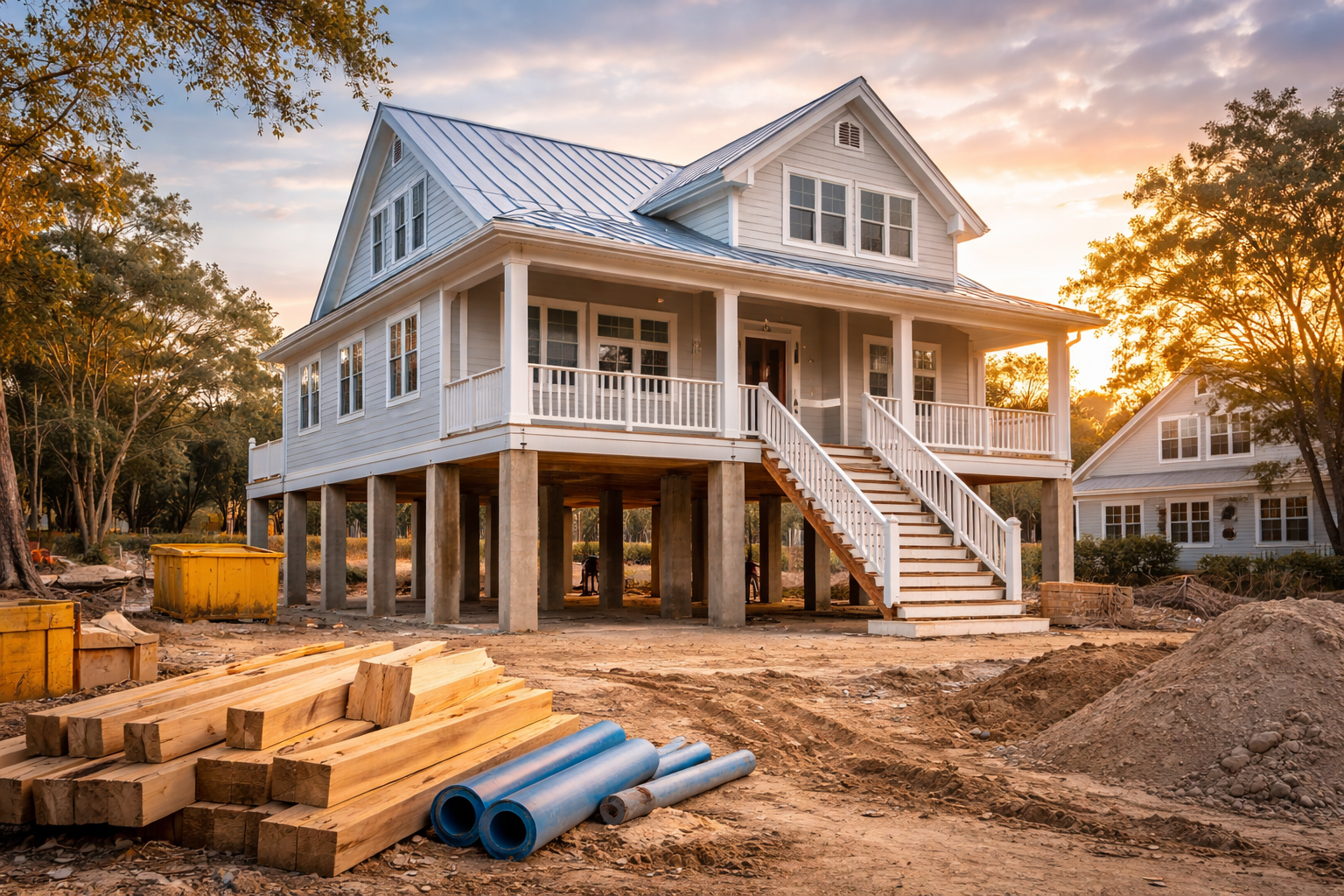
Coastal Construction Standards
Storms and strong winds are a reality in the Lowcountry, which is why local building codes require homes to meet higher wind-resistance and structural standards. These requirements make homes safer — but they also increase rebuilding costs after a loss.
Homes closer to the coast often require reinforced framing, impact-rated materials, elevated foundations, and stricter inspections. Older homes in Bluffton and Hilton Head may also need specialty materials or craftsmanship to match original construction. All of this raises the replacement cost, even if the home’s market value hasn’t changed.
Labor Shortages After Storms
After major storms, rebuilding demand spikes across the region — often overnight. Skilled trades such as roofers, electricians, and framing crews become scarce, which drives labor costs higher and extends repair timelines.
In the Lowcountry, this effect is magnified because contractors are often pulled toward large-scale disaster zones, leaving fewer qualified crews available locally. Higher labor costs directly impact replacement cost calculations and can leave underinsured homeowners paying the difference.
Code Upgrades and Custom Features
Rebuilding after a loss often means bringing older homes up to current building codes, even if those standards didn’t exist when the home was originally built. Electrical systems, plumbing, insulation, and wind-mitigation features may all require updates to meet today’s safety and construction requirements.
Custom features also play a major role in replacement cost. High-end kitchens, built-ins, specialty flooring, trim work, porches, and additions all increase the cost to rebuild. If these upgrades aren’t reflected in your policy limits, you may be underinsured without realizing it.
Tip: Replacement cost coverage helps protect your home as local construction costs rise. You don’t have to wait for a claim to talk with an advisor about whether your coverage still fits your home.
Common Homeowner Mistakes with Insurance
Many homeowners in Bluffton, Hilton Head, and Beaufort County make well-intentioned insurance decisions that can unintentionally leave coverage gaps. These are some of the most common issues we see — and why they matter.
Relying on Market Value or Zillow
It’s common to look up your home’s value on Zillow or a real estate website and assume that number is what you should insure it for. The problem is that these tools estimate market value, not the cost to rebuild your home after a loss.
Online estimates rely on algorithms and public data. They don’t account for custom features, construction quality, or current rebuilding costs — and they don’t involve an in-person review of your property. Even a small valuation gap can translate into tens of thousands of dollars in uncovered rebuilding costs.
Aspect | Online Estimates (e.g., Zillow) | Insurance Replacement Cost Evaluations |
|---|---|---|
Accuracy | Algorithm-based, limited inputs | Detailed, property-specific review |
Credibility | General reference only | Used for insurance decision-making |
Best Use | Casual market awareness | Determining proper insurance limits |
If your insurance is based only on market value, it may not fully protect you. A local advisor or replacement cost evaluation can help determine a more accurate coverage amount.
Not Updating Coverage After Renovations
Renovations and upgrades increase what it would cost to rebuild your home — even if they don’t drastically change market value. Kitchen remodels, new bathrooms, additions, or finished spaces all raise replacement cost.
If these changes aren’t communicated to your insurance carrier, your policy limits may fall short when you need them most. This can lead to reduced claim payments, longer claim reviews, or unexpected out-of-pocket expenses.
Anytime you improve your home, it’s a good idea to review your replacement cost coverage to make sure it still reflects today’s rebuilding reality.
Skipping Extended Replacement Cost Endorsements
Some homeowners choose to skip extended replacement cost coverage to keep premiums lower. While that can save money up front, it often creates risk when rebuilding costs rise after a storm or widespread loss.
Extended replacement cost coverage acts as a buffer if construction prices increase beyond your policy limit. If labor shortages, material spikes, or code upgrades push rebuilding costs higher, this endorsement can help cover the gap. Without it, homeowners may be responsible for paying the difference out of pocket.
This coverage is especially important in coastal and storm-prone areas like the Lowcountry, where post-event rebuilding costs can rise quickly.
👉 You can learn more about how this endorsement works in our guide to Extended Replacement Cost Endorsements.
Tip: Working with a local, independent insurance agency helps you avoid these gaps. You get guidance tailored to your home, construction type, and local rebuilding conditions. Learn why this matters in our article on Independent Agency Value.
Reviewing your policy annually helps ensure your coverage keeps pace with real-world rebuilding costs — not just past assumptions.
How to Make Sure You Have Enough Replacement Cost Coverage
Proper coverage isn’t about what your home was worth years ago — it’s about what it would cost to rebuild today. These steps can help keep your replacement cost coverage aligned with reality.
Annual Coverage Reviews
Review your homeowners policy at least once a year. This allows you to account for:
Changes in construction and labor costs
Home improvements or renovations
Updated building codes or coastal requirements
You should also review coverage after major updates such as a new roof, kitchen remodel, room addition, or finished space.
Regular reviews reduce the risk of underinsurance and help ensure your coverage still reflects current rebuilding costs.
Using Tools to Estimate Rebuild Costs
Replacement cost is not the same as market value. It reflects what it would take to rebuild your home with similar materials and quality.
To determine an accurate replacement cost, you can:
Request a rebuild estimate from a licensed contractor or appraiser
Use your insurance agent’s reconstruction cost software
Document your home with photos or videos, especially after upgrades
These tools account for factors like material pricing, labor availability, code requirements, and custom features — all of which impact rebuilding costs.
Talking to Your Agent Before You File a Claim
Proactive conversations matter. Speaking with your insurance advisor before a loss helps you understand your coverage, identify gaps, and avoid surprises during a claim.
Your agent can explain:
How your policy would respond to a partial or total loss
Whether your limits are still appropriate
If endorsements or adjustments make sense
You don’t need an active claim to ask questions or request a review.
If you’d like a coverage check or updated quote, GSP Insurance Group is happy to help.
Key Takeaways
Replacement cost coverage pays for labor, materials, debris removal, and rebuilding — not land value or market demand
Market value often understates what it actually costs to rebuild after a loss
Regular policy reviews help keep coverage aligned with current construction realities
Extended replacement cost endorsements provide important protection when rebuilding costs rise
Every policy is different. Always review your coverage or speak with your insurance advisor about your specific situation.
FAQ
What is the main difference between market value and replacement cost?
Market value means the price your home could sell for now. Replacement cost is the money needed to rebuild your home the same way. Insurance uses replacement cost to help you fix your home after damage.
Why does my insurance company use replacement cost instead of market value?
Insurance companies want you to rebuild your home after something bad happens. Market value counts land and where your house is. Replacement cost pays for building your house again.
Can I insure my home for its market value?
You can pick market value, but you might not have enough coverage. Market value usually does not pay for all the rebuilding costs. Replacement cost coverage protects you better.
How often should I review my replacement cost coverage?
Check your coverage every year. Update your policy if you make changes or fix up your home. This helps you keep up with higher building prices and new rules.
Does replacement cost coverage include upgrades or code changes?
Replacement cost coverage can pay for upgrades and code changes if your policy says so. Ask your agent about ordinance or law coverage to make sure you are protected.
See Also
How Your Insurance Changes When A New Roommate Arrives
The Hidden $8,000 Cost: Understanding The Importance Of Gap Insurance